Popular Posts

Showing posts with label Event. Show all posts

Enjoy wine with Different glasses

Just to share my experience from yesterday's wine class. The things amazed me the most, maybe some of you already know, the taste of wine changes in different type and shape of glass we use. Sounds unbelievable? 


I experienced it myself in the class. We poured the wine into the 1st correct type of glass, swirl it, nose it, followed by a sip. The next step is to pour the wine from 1st glass into 2nd wine glass that suit for other type of wine, swirl, nose, and sip. Repeat the same process through 3rd glass and into the last disposable paper cup.


The taste of wine changed from one glass to another. From the 1st correct wine glass, we can get the perfect sense of aroma, with layers of taste when the wine flow in through the lip, the tongue, and went in our body. The taste totally change in 2nd, 3rd wine glass, no staggered taste, either just flat, or strong alcohol taste. The worse taste was the last disposable paper cup.

The set of glass I use in the class yesterday. 5 of them

The amazing part is when we pour the remaining wine from the last paper cup back to the 1st correct type of glass. The beautiful aroma and taste came back!! 


The taste changes from different glass wine came with scientifically proven basis of facts behind it. Long story short, the wine guru explained the dimensions and shape of wine glass create different velocity of liquid flow when we turn the wine glass from upright into drinking position, that varied the intensity of the mixture of ingredients in wine by travelling through the different distance and the shape of glass during the process, and with different liquid sharpness of wine flow edge the moment it flows into our mouth. All these factors change the taste of wine!


1 - White wine Chardonnay 
2 - Red wine Burgundy 
3 - Fruity white wine Sauvignon Blanc 
4 - Red wine Merlot, Shiraz and Bordeaux


Type of glass to use depend on type of barrel cask the wine use to store, location of vineyards and the fermentation process. Generally, most of the oak cask wine will use a wider, fatter and not as tall wine glass. 


For example like white wine Chardonnay and red wine Burgundy, the different between these two is Chardonnay uses fat, shorter and wider opening. While Burgundy uses taller and shallower opening. But both uses the fattest body type among others. So to achieve it's staggered aroma and taste.


For white wine Sauvignon Blanc, more to grape and fruity variety is suitable to drink with slimmer and taller glass.


Then the more popular red wine like Merlot, Shiraz, and Bordeaux can use the glass with diameter in between the first two type, but the tallest among all.

Be the first to own 121 Residence at Glomac Triple Boost Year End Bonanza


I always love to see interior design of a new development and lately went to Menara Glomac  to view its 121 Residences. Spacious and tastefully renovated. It's near to the city with smart interior, complete community facility, walking distance to LRT3 and in the heart of PJ-Damansara, close to a few shopping centers ie 1 Utama, Centrepoint, Glo Damansara and E Curve, and also close to education institution and medical centres! Heaven! 


The "CO" concept is echoed in the slogan the lifestyle Collection which means that all 3 elements - connect, comfort & community - are united under one roof, consolidated and offered exclusively to the residents of 121 RESIDENCES. All 3 words starting with CO which is a prefix that denotes togetherness, unity and collaboration.


COMFORT is used to describe the interior of the development 
CONNECT in reference to the external - easy connectivity to the city 
COMMUNITY refering to the shared spaces and facilities that will promote interaction and social closeness within 121 Residences.


121 Residences is a leasehold SOHO Serviced Apartment located at Kayu Ara, Petaling Jaya, Selangor. It is made up of 2 Towers, 33 Storey and 834 Units. There is 2 layout which are 2 rooms 1 bath @ 450sqft from RM318k and 3 rooms 2 baths @ 750sqft from RM450k. The maintenance fees is RM0.38 per sqft and its estimate completion is in year 2023.

The current sales package under Home Ownership Campaign 2019 will be a Free MOT & Loan Stamp Duty, Free SPA Legal Fees & Disbursements and you can own one with just a RM5000 booking fee.

Glomac also featured Plaza Kelana Jaya, a Serviced Apartment & Shop Office at SS7, Kelana Jaya, Petaling Jaya, Selangor, with its freehold 2 Towers, 31 Storey and 696 Units. The price range from 1+1 rooms 1 bath @ 450sqft from RM380k, and 3 rooms 2 baths @ 750sqft from RM580k. Maintenance Fees are RM0.40 per sqft with its estimate completion at year 2022.

During this period, there is a sales package with HOC 2019 (Free MOT & Loan Stamp Duty), free SPA legal fees & disbursements. You can own one with just RM1000 booking fee (bumi-lot) and RM5000 booking fee (non bumi-lot)


Glomac is having a Triple Boost, Year End Bonanza event on 8th December 2019 (Sunday) at Main Concourse, Glo Damansara. Its launching its 121 Residences, Tower B so do grab the chance to enjoy last chance of HOC2019 benefits. Don’t miss Glomac’s 30th Anniversary Special Discounts, Cashback & Giveaways. You will also get RM50 instant cashback when you pay your booking with your Boost e-wallet. 

Khalil Adis, International Property Consultant will be speaking at 12noon, while Jason Lu, Head of Strategy aka The Makeover Guys will be there at 3pm.

Not forgetting plenty of refreshments, free bubble tea, free ice cream, games & activities with lots of prizes to be won. Check this out:
.
Glomac’s Triple Boost, Year End Bonanza Event
Date: 8 December 2019 (Sunday) from 11am to 6pm
Venue: Main Concourse, Glo Damansara
RSVP: https://bit.ly/33ymw7N 

Improving healthcare: How vaccination could prevent pneumonia etc and save lives of our loves one.

I strongly agree to give full vaccination to my children and always believe that prevention is a better choice. I have heard enough of virus and diseases, ie. Measles can cause brain swelling, which can lead to brain damage or death, Mumps that can cause permanent deafness, Meningitis can lead to permanent deafness or brain damage, and Polio that can cause permanent paralysis. GlaxoSmithKline Pharmaceutical Sdn. Bhd. (GSK Malaysia) has recently launch on its Vaccinate for Life campaign in Malaysia to raise awareness and educate the public on the importance of vaccinations and vaccine preventable diseases. One of my take back today is on pneumonia vaccination and its prevention.


In a nutshell, what is vaccine? It is Biological preparation that improves  immunity to a particular disease. It contains an agent that resembles a disease-causing microorganism. It is often made from weaked/killed forms of the microbe, its toxin or one of its surface proteins. It stimulates immune system to recognize the agent as foreign, destroy it, and “remember” it, so that the immune system can more easily recognize and destroy any of these microorganisms that it later encounters.

The importance of vaccination throughout their lives from infants to older adults.
GSK launches awareness campaign in conjunction with World Pneumonia Day 2019, underlining pneumonia as one the most common vaccine preventable diseases. In Malaysia, pneumonia is listed as one of the top five causes of death according to the Department of Statistics Malaysia. Pneumonia is an infectious disease that may be treated with antibiotics, but many people are not aware that it is preventable, using vaccination.


Pneumonia, a lung infection, can be caused by different bacteria, viruses and even fungi. Pneumococcal disease, in either invasive or non-invasive forms, is an infection caused by Streptococcus pneumoniae bacteria (pneumococcus). Pneumococcus can cause various types of infections, some of which can be life-threatening. One of the most common causes of severe pneumonia is pneumococcus bacteria. Besides pneumonia, pneumococcus bacteria can also cause ear and sinus infections (non-invasive).

‘Invasive’ pneumococcal bacteria can invade the bloodstream causing bloodstream infection (bacteremia) and meningitis (infection of the tissues and fluids covering the brain and spinal cord).

Pneumonia is today one of the leading causes of deaths in children, accounting for 18% of all deaths of children under five worldwide.Children under five years old are particularly susceptible to the disease especially those with compromised immune systems which may be weakened by malnutrition or undernourishment, especially in infants who are not exclusively breast-fed in spite of it being preventable and treatable in many cases.

Pneumonia was the principal cause of death for the population aged 0 to 14 years in 2018 at 4.8 per cent. Children under two years of age fall into the highest general risk group for invasive pneumococcal disease (IPD).

There are vaccines to prevent pneumococcal disease in children and adults. The introduction of pneumococcal conjugate vaccines (PCV) in many countries worldwide has helped to reduce infant deaths from pneumonia. Globally, while an estimated 71.3 million infants have received PCV, at the end of 2018, there were 55 million infants who still had no access to PCV.

 
“Next to clean drinking water, vaccination is the most powerful public health policy in preventing infectious diseases. We at GSK, believe that every child deserves access to vaccination. Through vaccination it has been demonstrated that diseases such as small pox can be eradicated. With improving healthcare policies and access we will continue to see the elimination of mortality and morbidity due to infectious diseases,” said Dr. Ashwini Saha, Vaccine Medical Director, GSK Malaysia.


Emphasizing the importance of vaccination, Dato’ Dr. Musa shared, “As we age, our immune system does too. This makes us vulnerable to life-threatening diseases. By strengthening our immune system with vaccination through scheduled administration of vaccines, we can certainly protect ourselves and those closest to us and eventually help save lives. The vaccinations we receive as children can certainly protect us from life-threatening or debilitating diseases and lays the foundation for a stronger immunity later in life.”


Dr. Yong Junina Fadzil added, “There is a huge misconception about vaccinations and its implications on a child’s health. On-going education, collaborations with healthcare professionals as well as affirmative action by policymakers can change people’s mindsets. The Government’s move to include the pneumococcal vaccine into the NIP is indeed laudable and it exemplifies the importance of getting children vaccinated against this infectious disease. Just like regular exercise and a healthy diet, diligently keeping to a scheduled vaccination programme is key to maintaining a healthy lifestyle. Ensuring the health of our children will ensure the health of our nation.”


We truly support the Ministry of Health’s call for children to be vaccinated against pneumococcal disease. We certainly welcome the much-awaited news on the inclusion of the pneumococcal conjugate vaccine (PCV) into the National Immunisation Programme (NIP),” said Mr. David Lin.

“GSK’s Vaccinate for Life campaign extends beyond just a call for vaccination against pneumonia and IPD. Vaccination doesn’t stop at childhood as it helps give children a healthy start in life. It is not something you outgrow as vaccination is needed throughout one’s life to protect against preventable diseases and to prevent diseases from spreading in the community, ” explained Mr. David Lin.

With a 60 year footprint in healthcare in Malaysia, GSK remains committed to their patient focus values reiterated by Vaccinate for Life with a two-fold objective :

· - To provide information on vaccine preventable diseases to the public to support them to make informed decisions on their healthcare.
·  - To highlight the importance of vaccinating throughout one’s life.

(L to R) Dr. Ashwini Saha (Vaccine Medical Director, GSK Malaysia), Dr. Yong Junina Fadzil (Consultant Paediatrician and Paediatric Cardiologist), Dato’ Dr. Musa Mohd Nordin (Consultant Paediatrician and Neonatologist), Mr. David Lin (Communications & Government Affairs Director, GSK Malaysia) discuss the importance of vaccination for life.
  
In a nutshell, Vaccination saves lives and improves health. Vaccination is the most cost-effective health-care intervention available; it helps to inhibit the spread of disease, protecting people from illness and death. 
Depression and Anxiety: The Importance of Mental Health check at Workplace

Mental Health issue is a very sensitive topic especially in the workplace. We work for almost 40 hours per week from Monday to Friday, which leaves us very little time for our family.  Factors such as work stress and conflict situations at work is no longer an uncommon factor that contributes to  stress and at times, even leading to depression. As such, it is important to keep our  mental health in check, so that we can take the necessary steps to get better. This forum, hosted by Qualitas Medical Group was very much an eye-opener for me and presented us with many interesting insights and things that we should take note of.

Being a mother myself who needs to juggle work, my kids and everything in between, this forum has put a lot of things in perspective for me. 


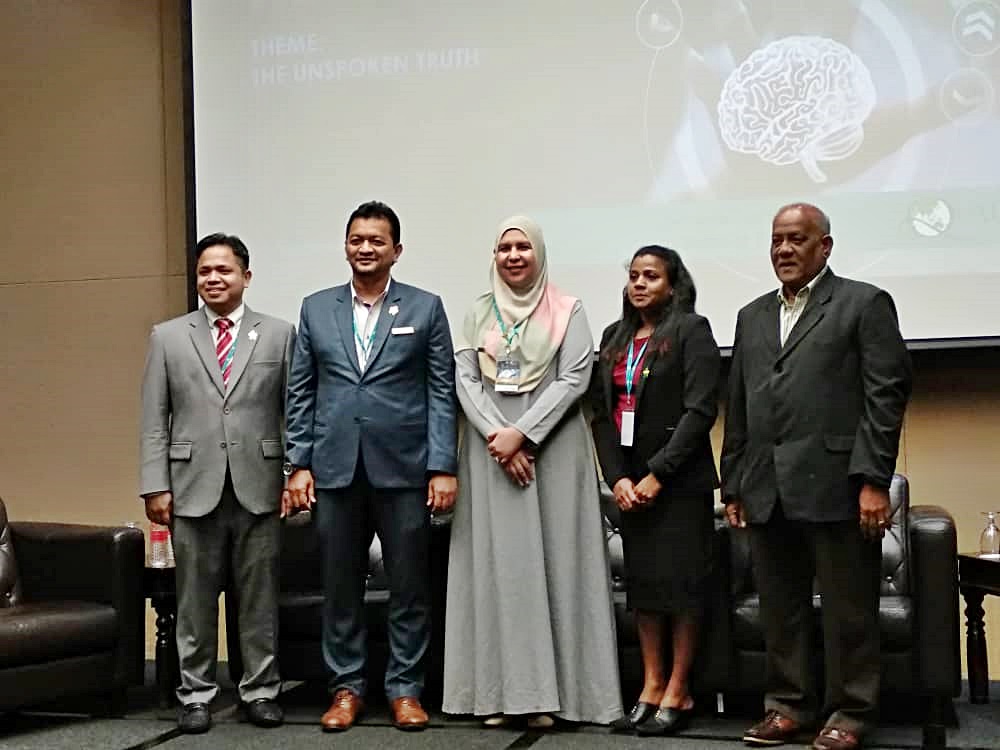
(L-R) An insightful panel discussion on the importance of taking positive steps to ensure employees are well taken care of at the workplace took place together with industry experts including Dr Shawaludin Husin, Vice President, Malaysian Society of Occupational Safety and Health (“MSOSH”),  Puan Sarah Waheeda Muhammad Hafidz, Consultant, Industrial and Occupational Psychology, Leadernomics, Dr Puspamary Matthews, Family Medicine Specialist & Occupational Health Doctor, Qualitas Medical Group and Mr A. Balasubramaniam, Deputy Secretary General, Malaysian Trades Union Congress (“MTUC”).
In efforts to address the rising number of mental health issuesin Malaysia, homegrown and leading primary healthcare provider Qualitas Medical Group (‘Qualitas’) organised this form and the forum also saw a panel session which initiated robust discussions on mental health at the workplace. Themed, “Mental Health at the Workplace: The Unspoken Truth”, the session was attended by representatives from the Ministry of Health, Department of Occupational Safety and Health (DOSH), Malaysian Medical Association (MMA), the Malaysian Society for Occupational Safety and Health (MSOSH) as well as Third Party Administrators, corporate and industrial leaders.

(L-R) Mr Karim Dhala, Director of Corporate Services, Qualitas Medical Group, Ybhg. Dr Koh Kar Chai, Honorary General Treasurer, Malaysian Medical Association (“MMA”), YB Hannah Yeoh, Deputy Minister Women, Family and Community Development, Ybhg. Dato Dr Noorul Ameen Mohamed Ishack, Chairman and Managing Director, Qualitas Medical Group and Ybhg. Dato Dr R.S Kumar, Chairman of Medical Governance Board, Qualitas Medical Group officiating a forum themed, ‘Mental Health at The Workplace: The Unspoken Truth’.

The event was officiated by Yang Berhormat Puan Hannah Yeoh, Deputy Minister of Women, Family and Community Development. In her keynote speech, Yang Berhormat Puan Hannah Yeoh emphasised the pressing need to reduce the stigma on mental health issues within the community and the important role that general practitioners can play as the first line of care on mental health.

Ybhg. Dato Dr Noorul Ameen Mohamed Ishack, Chairman and Managing Director, Qualitas Medical Group giving his opening remarks at forum held today themed, ‘Mental Health at The Workplace: The Unspoken Truth’
Delivering a keynote address at the session, Chairman and Managing Director of Qualitas Medical Group, Yang Berbahagia Dato’ Dr Noorul Ameen Mohamed Ishack said, “Mental health has been extensively discussed by key authorities, non-profit organisations for many years. Sadly, individuals suffering from depression and anxiety are reluctant to seek help as they fear the stigma of being stereotyped. The time has come for immediate practical actions to be taken by all stakeholders – The general practitioners should be empowered to play a more active and positive role in the management of mental health wellness; and for that, changes need to be made by the Government in empowering general practitioners to act as the gatekeeper on mental health.”

While depression and anxiety pose a mental health challenge for sufferers, these issues also have a significant economic impact on the country. According to the World Health Organization (WHO) this year, depression and anxiety is estimated to cost the global economy approximately US$1 trillion per year in lost productivity. As businesses thrive on optimum productivity, it is beneficial to both employers and employees to prioritise the wellbeing of employees.

In 2017, a study conducted by AIA Bhd titled “Malaysia’s Healthiest Workplace by AIA Vitality” reported that 12% of employees have high level of anxiety and depressive symptoms. A follow up survey in 2018 further revealed that 50.2% of employees have at least one dimension of work-related stress. This worrying trend poses a challenge for individuals, companies and society in Malaysia which can have tremendous repercussions if left unaddressed.

Dr Shawaludin Husin, Vice President, Malaysian Society of Occupational Safety and Health shared“Prevention measures for accidents and injuries that affect one’s physique is no longer sufficient but we need to manage how stress, depression and other mental issues would lead to unforeseen mishaps in the workforce. Thus, organisations need to urgently look into effective safety and health management system and policies that ensures the overall wellbeing, which may include initiatives such as mindfulness training, financial planning, on-the-hour flash walk, among others.”

Primary Healthcare Personnel As The First Line Of Care
In Malaysia, primary healthcare personnel – general practitioners (GPs) have been the first contact for people seeking healthcare. As most GP clinics are well spread out in the neighbourhoods nationwide, the GPs have traditionally been regarded by society as the first line of care.


“Primary healthcare needs to evolve, equipping its workforce with the right knowledge, confidence and capacity to provide mental health support, now more than ever. With primary healthcare practitioners onboard, I am certain that employees will feel less stereotyped and more open to receiving treatment in the early stages. This would greatly improve the mental health outlook in Malaysia, contributing to a positive community, workforce and the nation’s economy”, said Pn Sarah Waheeda Muhammad Hafidz, Consultant Industrial and Occupational Psychologist from Leaderonomics.

“Over the years, many patients have come to the GP clinics complaining of frequent migraine, insomnia, fatigue and impaired concentration. These patients may or may not realise that they are suffering from anxiety and depression. Coupled with the stigma attached to mental health wellness issues, these patients are often reluctant to be seen as visiting mental health professionals. Sufferers are looking to primary healthcare personnel for their needs – As such, we as primary healthcare practitioners need to be empowered, upskilled and be prepared to meet these requirements,” added Yang Berbahagia Dato’ Dr Noorul Ameen Mohamed Ishack.
                              
Today, the role of the primary healthcare is required to shift beyond merely supporting physical wellbeing to becoming the first line of assistance for mental health issues. More and more, the primary healthcare workforce will need to be empowered with the right knowledge, confidence and capacity to provide first line mental health support for patients in their time of need.


The panel session was organised by Qualitas as part of its commitment to continue to provide integrated healthcare within the primary healthcare sector. 


Work life balance is one of the key steps to take to achieve a positive state of mind, and it is important for organisations to implement measures to ensure that employees are well-taken care of in terms of their mental wellbeing within the workplace. 

A good work-life balance for employees can improve staff motivation, increase staff retention rates, reduce absence, attract new talent, and reduce employee stress, which creates a more conducive work environment.  

As a working mum myself, it is very important to create a balance between work-life and plan my personal time accordingly. We all feel stressed at some point in time, be it due to personal or work reasons and this definitely will affect our mental health. When we feel stressed or anxious, it’s important to take time-out for ourselves, or share our concerns and unease with a loved one or a close friend for emotional support and advice.


This forum has indeed been an eye-opener for me, reminding me to take proactive steps to balance my worklife and personal time to ensure that I am able to spend more time with my family and beloved kids. 

Women’s Aid Organisation calls for 7 days of paternity leave for fathers in the private sector through an online petition, which has garnered 39,340 signatures!


The petition advocating for 7 days of paternity leave was recently handed over to YB M. Kulasegaran, Minister of Human Resources and YB Hannah Yeoh, Deputy Minister of Women, Family and Community Development by the Women’s Aid Organisation (WAO). With 39,340 signatures garnered from the public, the petition handover further reiterates the need for fathers to take on an active role as an equal parent in raising a child.


It’s still fresh in my memory, how my hubby was only given 1 day of paternity leave and subsequently had to apply for an extra day off to be there for me and our newborn. He had enough time only to get our new born registered and head to the market to shop for groceries. Having him around was a huge help to me hence I believe that 1 day or even the proposed 3 days of paternity leave will never be enough! In such a short duration, fathers don't have the time to bond with their little one or be there for their wife during the healing period.   


Last week, it was my first time gathering in front of the Parliament for a petition handover event and it was exciting to witness so many people come together, lobbying for 7 days of paternity leave. The teddy bears were to signify our children and showcase that this is for them. Daphne Iking and Jinnyboy were present at the event too, highlighting the importance of paternity leave and encouraging the concept of shared parenting. 


Daphne shared that with 7 days of paternity leave, fathers will have the opportunity to play an active role during childbirth and be there with their wife whilst sharing the responsibility of taking care of their newborn. For new parents, the first week is extremely crucial as the wife is healing from childbirth, and fathers need to be present and take up the responsibility of the child. This will allow new mothers to get sufficient rest and heal entirely after childbirth.  A lot of mothers also tend to suffer from postpartum depression, therefore having their husband around during this sensitive phase will ease their transition into parenthood.


Did you know that the concept of paternity leave is actually common in many countries across SouthEast Asia? In fact, Singapore has 2 weeks of paid paternity leave whereas Myanmar offers 15 days and the Philippines provides between 7 to 14 days for new fathers. The petition which was rolled out by WAO in June 2019 has since garnered 39,340 signatures, out of which 38,878 were collected online and 462 offline. 


“Many Malaysians want paternity leave and the government must heed this call,” said WAO Executive Director Sumitra Visvanathan when presenting the petition to Human Resources Minister M. Kulasegaran and Deputy Women, Family and Community Development Minister Hannah Yeoh in Parliament today.


“The three days of paternity leave proposed by the government is a positive step, but it’s simply not enough. Fathers in the private sector deserve at least 7 days of paternity leave, similar to the existing paternity leave in the public sector,” Sumitra added.


Those who signed the petition also shared the challenges they had faced due to the lack of paternity leave. “I just became a father recently and without proper paternity leave to care for my newborn baby, it was hard on my wife and me,” explained Jasper Ooi.

Another petitioner, Priyasheni Paramasivan, also echoed Ooi’s sentiment. "I just gave birth to a premature baby and my husband had only two days of paternity leave. I still need him to check on the baby who is in the neonatal intensive care unit and support me,” said Priyasheni.

Meanwhile, other petitioners emphasised that workplaces must provide better support for new parents. “Seven days of paternity leave should be the absolute minimum. You can't expect your employee to perform at his best when you're forcing him to choose between work and family,” said Abol Hanif Abol Munafi.


The proposed 3 days of paternity leave is a positive start. However, it is not sufficient. Parents need more time in the initial transition phase into parenthood, not just as new parents but as partners as well. I hope that the government seriously takes all of this into consideration and introduces 7 days of paternity leave for fathers in the private sector. We need this for our current and future generation to raise healthy families, supported by shared parenting. Show your support by signing this petition and speak up for #7DaysforDads.